

Stories of the Future: From Dread to Direction
Zennieve is an undergraduate from NUS College, who was interning with Studio Dojo over the summer holidays. Her time with us happened to coincide with Prof. Sohail and Dr. Ivana’s visit to Singapore, and she had the opportunity to participate in their Futures Masterclass. This post attempts to consolidate the concepts covered over the two days and more importantly, to flesh out the multi-layered paradigm shifts in her thoughts and feelings about the future.
I am fairly certain my panicked, tongue-tied response is not uncommon when asked, “What do you think the future looks like?”. As someone who had yet to traverse the unfamiliar terrain of Futures Thinking, I was not entirely sure what to expect from a 2-day Futures Masterclass conducted by pioneers of this field – Professor Sohail Inayatullah and Dr. Ivana Milojević. But as it turned out, just Prof. Sohail’s first half-hour opening alone, grounded in the tangible shifts that unfolded for his work with the Asian Development Bank, was enough for me to grasp the realness of a possibility to chart an otherwise implausible future.

The Six Pillars of Futures Thinking – comprised of Mapping, Anticipation, Timing, Deepening, Creating Alternatives and Transforming – is a structured toolkit developed by Prof. Sohail for navigating complexity and imagining alternative futures. In the Masterclass, it provided the overarching framework through which we applied each methodology hands-on, enabling us to uncover new ways of thinking about change.
But first, we looked inward with the Polak Game, examining how we each imagined the future and the extent of agency we believed we held. In precipitating a discussion on current trends and cultural influences, this laid essential groundwork for the reflexive sharings that followed. Having carved out our present positionalities, we then stepped into the unknown with four distinct topics: mental health and therapy, software development firm, adult learning and education, and tertiary education curriculum and assessments.
In Mapping the future, discussions were first anchored in Prof. Sohail’s own methodology, the Futures Triangle. What struck me here was how consistently certain anxieties and aspirations surfaced across the four groups, in spite of the seemingly disparate domains. For instance, while the mental health landscape remains entangled with the societal stigma of pathology, and the education system is weighed down by an overemphasis on credentials, it was apparent that both groups were pulling toward a community-oriented approach that draws on innate human potential.
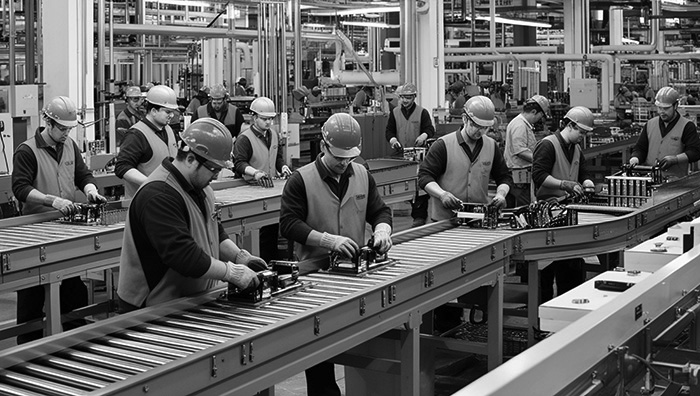

This shared ethos of transcending fixed systems toward human-centred experiences became harder to ignore when we moved to the Change Progression Scenario Method. Here, storytelling became an indispensable tool for imagining such transformation. Zooming in on one group’s exploration of the future of Singapore’s SkillsFuture programme to upskilling adults through lifelong learning, the transition from familiar factory to vibrant coral reefs took us on a powerful visual journey – one that integrated the possibility of flow and exploration within an adaptable ecosystem. The power of placing these four futures side by side lies precisely in the fact that no one image can be unseen once they have been visualized. With this realization, it was clear that scenario work helps not to predict what happens, but to expand the dimensions of what we allow ourselves to consider possible.

To consolidate and apply our learnings, the four groups then came together and employed the Backcasting method to conceptualize a concrete timeline for the Preferred Future of Singapore in 2040. Starting from various visions of success, an image we landed on was a ‘trampoline’. What seemed at first like a playful provocation became an instrumental North Star; as we outlined actionable steps, it was impossible not to feel the weight of choices being made, or that had to be made, to arrive at this vision.
The Sarkar Game added another dimension that was equally insightful for our group. By inhabiting different inner selves – the worker, the warrior, the intellectual, the capitalist, and the Sadvipra – what emerged was a reflection on the compliance that commonly characterises the Singaporean psyche. Perhaps this deeply cultivated orientation toward order is not necessarily damaging, but the implication here is significant: if we hope to mobilize individuals toward change, the script matters as much as its substance.
The final piece in the puzzle (and what I would argue was one of the core lenses of the Masterclass) was the Causal Layered Analysis exercise. Descending through four increasingly abstract layers to derive a fundamental metaphor, CLA once again draws on the power of narratives. It does so to the effect of uncovering the deeper stories we tell about the systems within which we operate and questioning what alternative stories we might choose to create. Like many of the techniques introduced throughout the Masterclass, CLA offered a new language for naming both our present realities and the futures we hope to move toward. This, perhaps, is my most enduring takeaway: not a fixed map of what the future holds, but a greater comfortability in sitting with its uncertainty and articulating its different possibilities.
I am deeply grateful to Prof. Sohail Inayatullah and Dr. Ivana Milojević for generously sharing their expertise, and to all fellow participants for their diverse perspectives, reflections, and willingness to partake in this disconcerting yet certainly enriching exercise. And for those curious about how to chart the way forward with more intention and stability, I warmly encourage you to join us next time – perhaps your own journey of imagining possible futures begins there.